 EN
EN

Designing a recognition program that truly motivates people across different performance tiers requires more than handing out a single prize at the end of the year. A well-structured multi-level reward system creates ongoing momentum, and the trophy award plays a central and irreplaceable role within that framework. Whether you are managing a corporate sales team, a sports league, an academic institution, or a large-scale employee engagement initiative, understanding how to position a trophy award at each level of your reward architecture can dramatically increase its emotional and motivational impact.
A multi-level reward system typically distributes recognition across entry-level milestones, mid-tier achievements, and top-tier distinctions. Each layer needs a symbol that carries appropriate visual weight and perceived value. The trophy award, when thoughtfully customized and strategically positioned, provides that tangible symbol at every stage. This article explores the practical mechanisms, design principles, and organizational logic that make a trophy award an effective cornerstone of tiered recognition programs.
Understanding the Role of a Trophy Award in Tiered Recognition
Why Physical Recognition Matters in Structured Programs
Digital badges, points systems, and leaderboard rankings have their place in modern incentive platforms, but none of them carry the lasting psychological weight of a physical trophy award. When a recipient holds a trophy award, it activates a different kind of emotional response — one rooted in pride, permanence, and public acknowledgment. This physical dimension is what makes the trophy award a uniquely powerful tool within a multi-level system.
Research in organizational behavior consistently shows that tangible rewards create stronger memory anchors than their digital counterparts. The physical presence of a trophy award on a desk, shelf, or display case becomes a daily reminder of the achievement it represents. Over time, this visibility reinforces the behavior that earned it, encouraging the recipient to strive toward the next level. In this sense, a trophy award does not just celebrate the past — it actively shapes future performance.
For organizations managing large groups of participants, the visibility of a trophy award also creates a social signal. When peers and colleagues see a trophy award on display, it communicates a clear message about what the organization values and rewards. This social proof element is critical to driving engagement across an entire group, not just among top performers.
Mapping the Trophy Award to Performance Tiers
One of the most important design decisions in a multi-level reward system is ensuring that each tier has a distinct and appropriate recognition artifact. A trophy award should not look or feel the same across all levels. Instead, the material, size, detail, and customization depth of the trophy award should scale proportionally with the tier it represents.
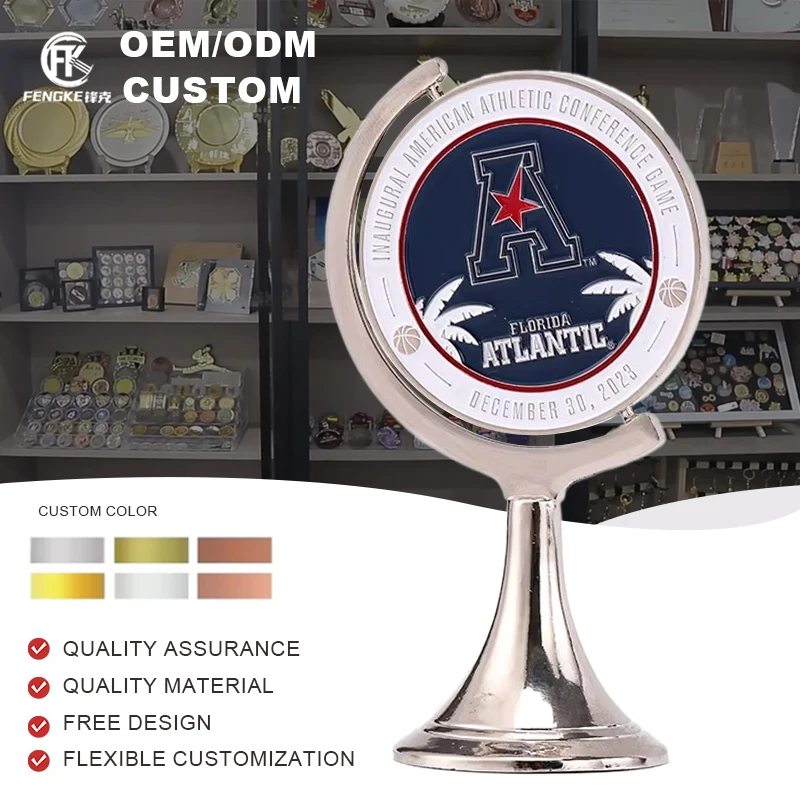
At the entry level, a trophy award might take the form of a smaller, elegantly designed piece that acknowledges participation or a first qualifying milestone. At the mid-tier, the trophy award should grow in size and complexity, perhaps incorporating rotating elements, engraved achievements, or sport-specific or role-specific design features. At the highest tier, the trophy award becomes a prestige object — fully customized, made from premium metals, and carrying a design that communicates exclusivity and elite status.
This intentional scaling ensures that recipients always have a clear visual reference point for what the next level looks like. When a participant sees a senior colleague's larger, more elaborate trophy award, the aspiration gap becomes concrete and motivating. The tiered trophy award system thus functions as both a recognition mechanism and a performance roadmap.
Designing a Multi-Level Trophy Award Structure
Defining Clear Achievement Criteria for Each Level
Before selecting or customizing a trophy award for any level, the organization must first define what each tier actually represents. Vague criteria undermine the credibility of the entire recognition system. If participants do not understand precisely what they must achieve to earn a specific trophy award, the motivational power of the system collapses.
Tier definitions should be quantifiable where possible. In a sales environment, this might mean closing a specific revenue threshold, achieving a certain customer satisfaction score, or maintaining a multi-month performance streak. In an academic or athletic context, it might involve scoring benchmarks, competition placements, or attendance and participation records. Each tier's trophy award should be explicitly tied to these defined criteria, so that earning the award feels genuinely meaningful and deserved.
Communicating these criteria widely and early is equally important. When participants know from the outset what each trophy award represents and how to earn it, they can set personal goals aligned with the program's structure. This transparency transforms the trophy award from a passive symbol into an active goal object — something specific to pursue rather than simply hope for.
Customization Strategies That Reinforce Tier Differentiation
Customization is one of the most powerful tools available when building a multi-level trophy award program. A custom trophy award communicates that the organization has invested thought and resources into the recognition experience, which significantly increases the perceived value of the award itself. Even at the entry level, a trophy award with the recipient's name, achievement date, and program branding feels far more meaningful than a generic off-the-shelf piece.
At higher tiers, customization should become more elaborate. This might include three-dimensional sculpted elements that reflect the specific achievement — such as sport-specific figures for athletic programs, or abstract designs representing innovation or leadership for corporate settings. Metal finishes, rotating bases, and intricate engravings all contribute to the sense that a top-tier trophy award is a truly premium object worth displaying and discussing.
Color coding and material differentiation are also effective tier signals. Bronze, silver, and gold finishes have long been used in competitive settings because they communicate hierarchy instantly and intuitively. Applying this logic across a multi-level trophy award program helps participants and observers read the recognition hierarchy at a glance, reinforcing the aspirational ladder that the system is designed to create.
Operational Integration of Trophy Awards Across Business and Organizational Contexts
Corporate and Sales Team Recognition Programs
In a corporate setting, a multi-level trophy award system can be integrated into quarterly or annual performance review cycles. Many organizations assign a trophy award to each performance quartile, with the top quartile receiving the most premium version and lower quartiles receiving progressively simpler designs. This approach ensures that the majority of participants receive some form of recognition while preserving the prestige of the highest-tier trophy award.
For sales teams specifically, the trophy award can be tied to cumulative performance metrics tracked in real time. When a sales representative knows exactly where they stand in relation to the next trophy award tier, it creates a continuous performance incentive rather than a one-time end-of-year push. Monthly or quarterly mini-ceremonies where lower-tier trophy awards are distributed also create regular recognition touchpoints, maintaining engagement throughout the full performance period.
The physical presentation of a trophy award in a team setting also creates a public recognition moment that amplifies the award's impact. Announcing the recipient's achievement in front of peers, explaining the specific metrics that earned the trophy award, and allowing a brief moment for the recipient to speak all transform the trophy award presentation from a logistical event into a cultural ritual that reinforces organizational values.
Athletic Leagues and Academic Competitions
Multi-level recognition is arguably most familiar in sports and academic contexts, where placement-based awards have existed for generations. A well-designed multi-level trophy award system in these environments moves beyond simple first, second, and third place distinctions to recognize a wider range of contributions and achievements. Most improved, most consistent, highest team contribution, and leadership awards can all be represented through distinct trophy award designs within the same program.
In youth sports leagues, a multi-level trophy award structure is particularly valuable because it ensures that participation and effort are recognized alongside raw competitive outcomes. Giving every participant a trophy award at the entry tier while reserving more elaborate designs for competitive performance outcomes allows organizations to celebrate effort and excellence simultaneously without diluting the prestige of top-tier recognition.
Academic institutions can apply the same logic across subject-specific competitions, honor roll programs, and extracurricular achievement tracks. When a student receives a trophy award for completing their first year of academic excellence and later receives a significantly more impressive trophy award for sustained multi-year distinction, the progression itself becomes a narrative of growth that the institution can celebrate publicly and use as an aspirational example for current students.
Logistics and Procurement Considerations for Multi-Level Programs
Planning Trophy Award Quantities and Timelines
Integrating a trophy award into a multi-level reward system requires careful advance planning on the procurement side. Unlike a single-event award purchase, a tiered program may require several distinct trophy award designs to be ordered, customized, and delivered on a recurring schedule. Organizations should map out the full award calendar before placing any orders, identifying exactly how many trophy award units will be needed at each tier and when each batch must be ready.
Lead times for custom trophy award production can vary significantly depending on the complexity of the design and the volume of the order. For programs that include highly customized metal trophies with engraving, rotating components, or complex three-dimensional elements, production lead times of several weeks are common. Building this timeline buffer into the program schedule from the beginning prevents the common and damaging situation where a recognition event is undermined by late or missing awards.
Bulk ordering strategies can also reduce per-unit costs while maintaining quality. Organizations running annual programs should consider ordering the full year's supply of each trophy award tier at once, even if individual awards are distributed across multiple events. This approach simplifies logistics, reduces reorder complexity, and often secures better pricing from suppliers.
Maintaining Consistency and Quality Across All Tiers
One of the most frequently overlooked aspects of multi-level trophy award programs is the importance of visual and quality consistency across the entire range. If entry-level awards feel flimsy or generic while top-tier awards feel premium, the implicit message is that only the highest achievers deserve quality recognition. This perception can damage the motivational impact of lower-tier awards and reduce overall program engagement.
Instead, every trophy award in the system should feel like a quality object — one that the recipient is proud to display regardless of which tier it represents. The differentiation between tiers should come through scale, complexity, and material richness rather than through a perception gap in quality. A smaller, simpler trophy award can still feel beautifully made and thoughtfully designed, which ensures that every recipient feels genuinely valued.
Working with a supplier who can produce a cohesive family of trophy award designs — all sharing visual DNA while clearly differentiating between tiers — is therefore a critical procurement consideration. Consistency in finish, branding, and design language across all levels signals that the organization has approached the recognition program with genuine care and professionalism.
FAQ
How many tiers should a multi-level trophy award system include?
There is no universal answer, but most effective programs include three to five tiers. Fewer than three tiers limits motivational range, while more than five can dilute the perceived value of each level. The right number depends on the size of your participant group, the range of performance outcomes you need to recognize, and the budget available for each tier's trophy award design. Start with three clear tiers and expand only when you have the participant volume and performance data to support finer distinctions.
Can the same trophy award design be reused across multiple years of a program?
Yes, using a consistent trophy award design across multiple years is actually a strategic advantage. When recipients and participants recognize the design immediately, it reinforces the program's identity and continuity. Year-specific customization — such as engraving the recipient's name and the year of achievement — keeps each individual trophy award unique while preserving the visual consistency that builds long-term brand equity for the recognition program itself.
What materials work best for a tiered trophy award program?
Metal-based trophy award designs are the most versatile across tiers. Zinc alloy, iron, and brass finishes can be applied with varying levels of detail and surface treatment to create clear tier differentiation while maintaining a cohesive family look. For top-tier awards, heavier metals and polished finishes communicate premium quality immediately. For entry and mid-tier awards, lighter alloys with clean design lines balance quality with cost efficiency, ensuring that the full program remains financially sustainable.
How should a trophy award presentation be structured within a recognition event?
The presentation ceremony is as important as the trophy award itself. Structure it so that lower-tier awards are presented first, building anticipation toward the top-tier recognition. For each recipient, briefly describe the specific achievement that earned the trophy award before presenting it — this contextualization amplifies the emotional impact and communicates to all attendees what behaviors and results the organization values. Allowing a brief moment for recipients to acknowledge their achievement publicly further strengthens the cultural ritual around the trophy award program.