 EN
EN
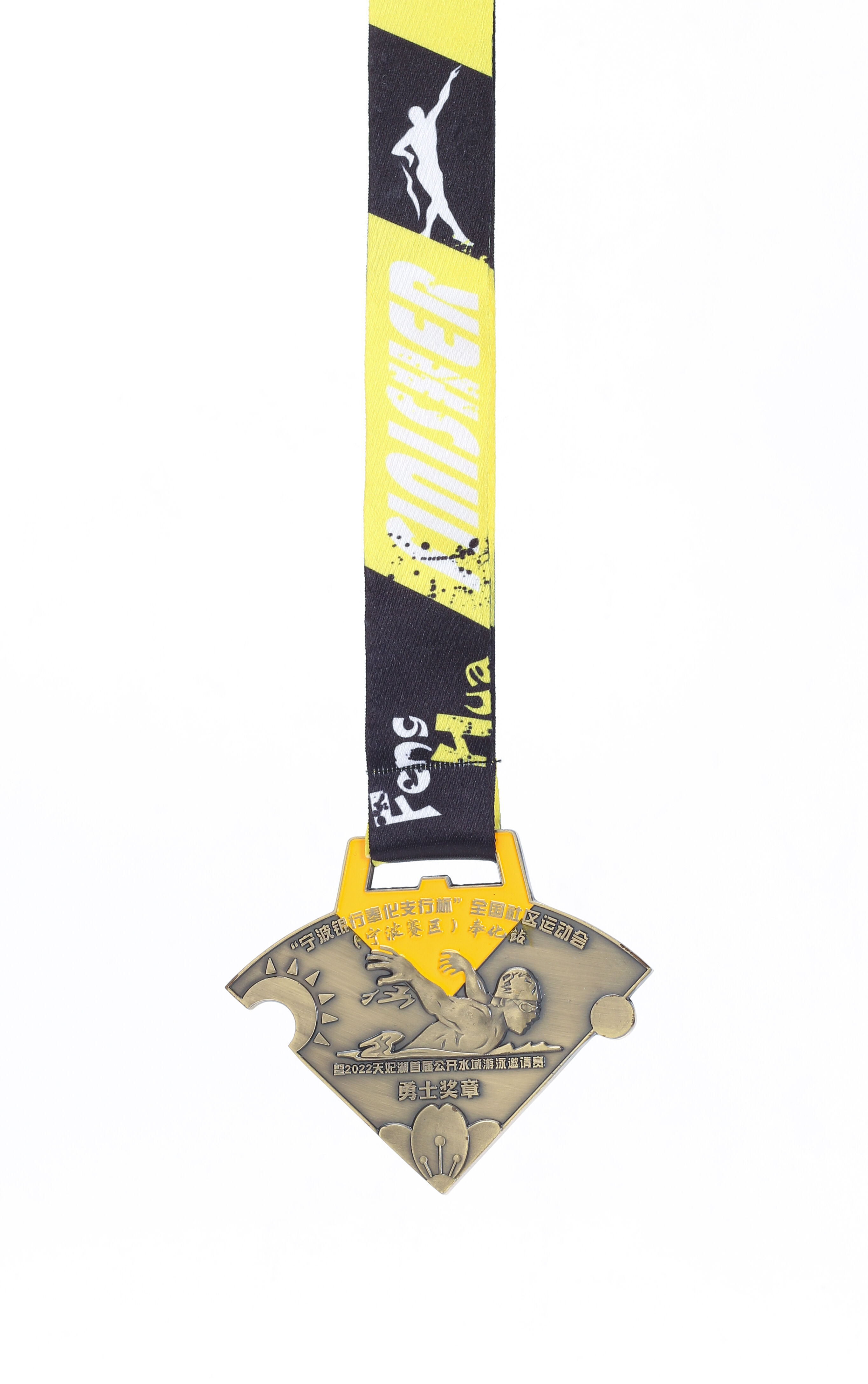
In the competitive landscape of sports events, corporate recognition programs, and team-building activities, the puzzle medal has emerged as a uniquely engaging award format that transforms traditional recognition into an interactive experience. Unlike standard medals that hang inert from ribbons, puzzle medals combine multiple interlocking pieces that athletes, employees, or participants collect over time, creating both a functional keepsake and a visually compelling achievement tracker. Designing an effective puzzle medal requires careful attention to mechanical engineering principles, aesthetic cohesion, and the practical demands of mass production, distribution, and long-term durability. This comprehensive guide explores the essential methodology for creating puzzle medals that successfully merge functional excellence with stylistic appeal, addressing the technical challenges designers face when translating conceptual vision into tangible metal awards that participants will treasure for years.
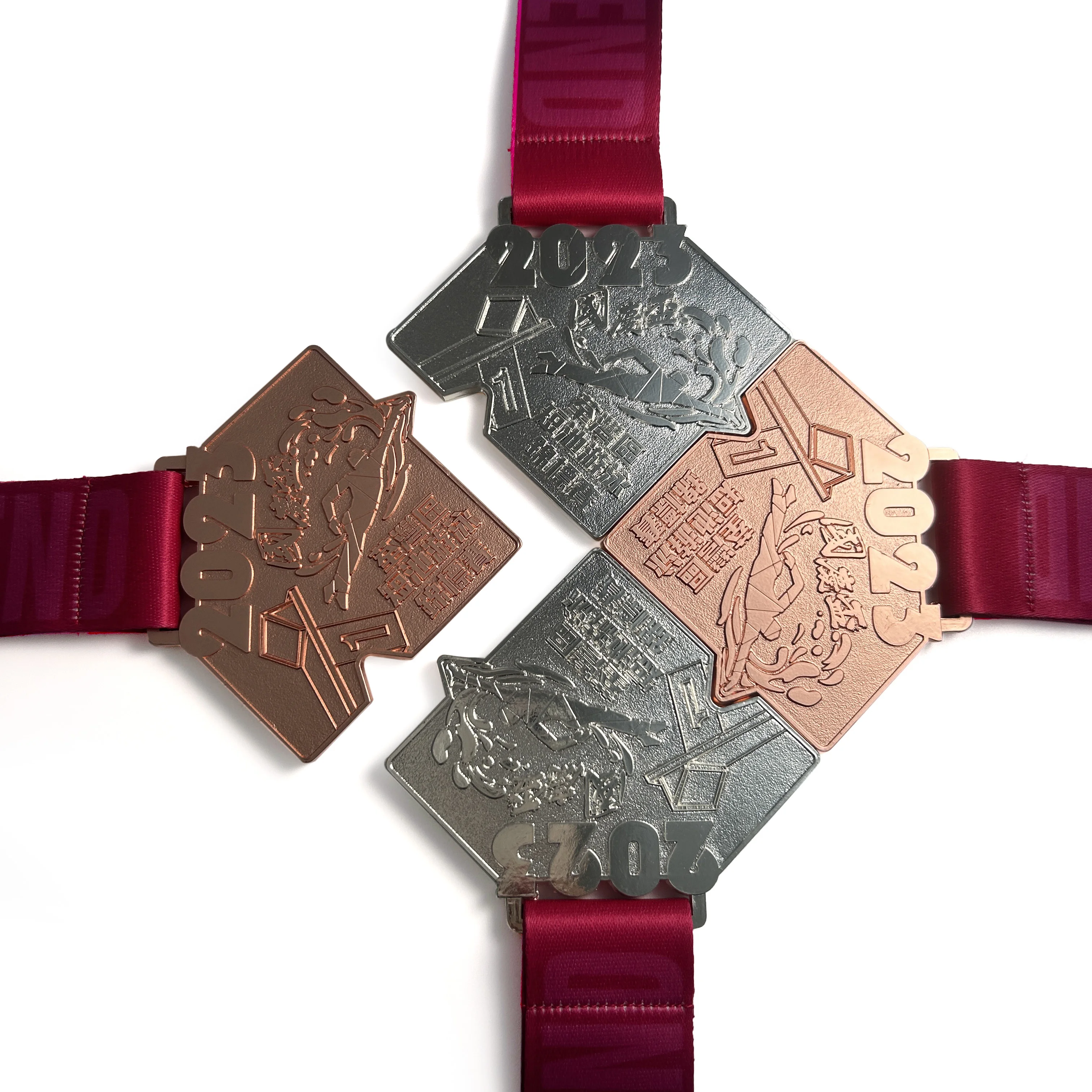
The fundamental challenge in puzzle medal design lies in achieving the delicate balance between interlocking precision and visual storytelling, where each component piece must function independently as a recognizable award while simultaneously contributing to a larger unified composition when assembled. Professional designers must consider dimensional tolerances that accommodate manufacturing variance while ensuring reliable connection mechanisms, select metal alloys and finishing processes that maintain consistent appearance across production batches, and develop graphic layouts that remain legible both on individual pieces and within the completed assembly. This guide systematically addresses each critical design decision point, from initial concept sketching through prototyping iterations to final production specifications, providing actionable frameworks that enable designers to create puzzle medals that deliver satisfying tactile interaction, maintain structural integrity through repeated assembly cycles, and project the sophisticated brand identity that modern organizations demand from their recognition programs.
Understanding the Dual-Purpose Design Philosophy of Puzzle Medals
Defining Functional Requirements Beyond Aesthetic Appeal
The functional dimension of puzzle medal design extends far beyond simple visual presentation, encompassing mechanical reliability, ergonomic handling characteristics, and long-term material performance under varied environmental conditions. Each interlocking component must maintain dimensional stability across temperature fluctuations, resist deformation from repeated connection and separation cycles, and provide tactile feedback that signals secure engagement without requiring excessive force. Professional designers establish detailed functional specifications early in the development process, defining minimum connection strength thresholds, maximum insertion force limits, and acceptable tolerance ranges for manufacturing variance. These technical parameters directly influence material selection, connection mechanism design, and manufacturing process choices, creating a foundation upon which stylistic elements are subsequently layered.
The puzzle medal format introduces unique functional considerations absent from traditional single-piece awards, particularly regarding the relationship between individual component utility and collective assembly value. Each segment must function as a standalone recognition piece with sufficient visual completeness to satisfy recipients who possess only partial sets, while simultaneously incorporating design elements that clearly communicate its role within the larger puzzle structure. This dual-purpose requirement demands careful graphic planning, where edge treatments, color blocking, and symbolic imagery work at multiple scales. Designers must consider how participants will store, display, and transport individual pieces before completing their collections, ensuring that loose components resist tangling with ribbon attachments, maintain recognizable orientation without assembled context, and project professional quality even in isolation.
Establishing Style Coherence Across Multiple Components
Stylistic unity across puzzle medal components requires systematic visual planning that extends beyond surface decoration to encompass form language, material treatment, and symbolic narrative development. Professional designers establish comprehensive style guides that define color palettes, typography systems, graphic motif libraries, and dimensional proportioning rules applicable across all puzzle pieces. This systematic approach ensures that components manufactured in different production runs or by separate vendors maintain visual consistency, preventing the jarring mismatches that undermine perceived quality and participant satisfaction. The style guide becomes particularly critical when puzzle medal programs span multiple years or events, requiring new components that integrate seamlessly with previously distributed pieces while introducing fresh visual interest.
The challenge of maintaining style coherence intensifies when puzzle medal designs incorporate varied finishing techniques across different components, such as combining polished areas with sandblasted textures or integrating enamel fills with bare metal surfaces. Designers must ensure that these varied treatments follow consistent application logic rather than appearing randomly distributed, creating intentional visual rhythm that guides the eye through the assembled composition. Material transitions should reinforce the puzzle medal narrative structure, using finish changes to delineate thematic sections, highlight connection points, or establish visual hierarchy among components. This deliberate approach to material variation prevents the chaotic appearance that results from applying diverse techniques without underlying organizational principle, instead creating sophisticated surface interest that rewards close examination while maintaining legible overall composition.
Engineering Reliable Connection Mechanisms for Repeated Assembly
Selecting Appropriate Interlocking Systems for Medal Applications
The mechanical heart of any puzzle medal design resides in its connection system, which must balance ease of assembly with sufficient retention strength to prevent unintended separation during handling and display. Professional designers evaluate multiple interlocking paradigms during the concept phase, including traditional jigsaw-style tab-and-slot arrangements, hook-and-eye systems, magnetic coupling, snap-fit mechanisms, and threaded connections. Each approach presents distinct advantages and limitations regarding manufacturing complexity, assembly intuitiveness, disassembly capability, and long-term reliability. The puzzle medal application context significantly influences optimal mechanism selection, with event medals distributed to general participants favoring foolproof connection designs that function correctly regardless of assembly orientation, while premium corporate recognition awards may justify more sophisticated mechanisms that provide enhanced tactile satisfaction.
Tab-and-slot systems remain the most widely adopted connection approach for puzzle medal designs due to their manufacturing efficiency, intuitive operation, and compatibility with traditional die-striking production methods. However, successful implementation requires careful attention to dimensional tolerancing, ensuring sufficient clearance for reliable insertion while minimizing play that creates loose, rattling assemblies. Designers must account for the cumulative effect of manufacturing tolerances across multiple connection points, recognizing that acceptable variance in individual joints may compound to unacceptable looseness when four or more pieces connect simultaneously. Professional practice involves specifying tighter tolerances for puzzle medal components than standard single-piece medals, often requiring secondary machining operations or precision die maintenance protocols that increase per-unit production costs but deliver the superior fit quality that justifies premium puzzle medal pricing.
Optimizing Connection Geometry for Manufacturing and User Experience
The geometric configuration of puzzle medal connection features directly impacts both manufacturing feasibility and user assembly experience, requiring designers to navigate competing demands of production efficiency and ergonomic satisfaction. Sharp internal corners in tab-and-slot designs create stress concentration points that increase crack propagation risk during die striking and subsequent handling, while excessively rounded geometries reduce effective engagement length and compromise connection strength. Professional designers employ fillet radii that balance these concerns, typically applying minimum radius values of 0.3-0.5mm at internal corners while maintaining sharper external edges that facilitate alignment during assembly. The asymmetric treatment of connection geometry creates directional assembly cues that reduce user confusion while accommodating manufacturing constraints inherent to metal forming processes.
Connection point placement within the overall puzzle medal composition requires strategic consideration of both structural integrity and visual impact. Positioning interlocking features along component edges maximizes usable surface area for graphic content while simplifying alignment during assembly, but concentrates mechanical stress at peripheral locations where material support is minimal. Alternatively, embedding connection points within component interiors distributes structural loads more effectively and enables more complex assembly patterns, but reduces available decoration space and may obscure connection locations beneath graphic elements. The optimal placement strategy depends on the specific puzzle medal configuration, with linear arrangements of three to five pieces generally favoring edge connections, while complex multi-directional assemblies benefit from interior connection schemes that establish clear structural hierarchy among components.
Developing Visual Narratives That Function Across Multiple Scales
Creating Graphic Systems That Reward Progressive Collection
The unique value proposition of puzzle medal programs lies in their capacity to transform incremental achievement into visible progress, making graphic narrative development a critical design consideration that extends beyond decorative surface treatment. Professional designers approach puzzle medal graphics as serialized visual stories, where each component carries sufficient symbolic weight to acknowledge individual accomplishments while contributing essential narrative elements to the complete assembled image. This serialization strategy may manifest as geographical mapping across regional competitions, temporal progression through seasonal events, or thematic exploration of organizational values across training milestones. The narrative framework provides meaningful context for collection behavior, transforming medal accumulation from arbitrary gathering into purposeful completion of a coherent symbolic journey.
Effective puzzle medal graphics employ sophisticated visual layering techniques that reveal different information hierarchies depending on viewing context and assembly state. At the individual component level, graphics must communicate event identity, achievement category, and connection to broader organizational branding through typography, color application, and iconographic elements that function within the constrained real estate of a single piece. When components assemble into partial configurations, transitional visual relationships emerge as edge graphics align, color fields merge, and symbolic elements combine to suggest the completed composition. The final assembled puzzle medal reveals the complete narrative, often incorporating surprise elements such as hidden text, emergent imagery formed by the confluence of separate graphic fragments, or dimensional effects created through coordinated use of varied finishing techniques across adjacent pieces.
Balancing Legibility Requirements with Artistic Ambition
The compact scale and complex geometry of puzzle medal components impose significant constraints on graphic legibility, requiring designers to prioritize information hierarchy and resist the temptation to overcrowd limited surface area with excessive text or intricate imagery. Professional practice establishes minimum feature sizes based on manufacturing capabilities and typical viewing distances, generally specifying text heights of at least 2.5mm for die-struck characters and line weights of 0.4mm or greater for graphic elements. These dimensional minimums ensure that puzzle medal graphics remain crisp and legible even when viewed by recipients with modest visual acuity or under suboptimal lighting conditions. Designers working within these constraints must employ strategic editing, eliminating extraneous decorative elements and condensing verbose text to essential keywords that efficiently communicate achievement context.
The tension between artistic ambition and legibility requirements becomes particularly acute when puzzle medal designs incorporate complex illustrative content, photographic imagery, or elaborate organizational logos that resist simplification. Professional designers address this challenge through careful graphic adaptation, redrawing intricate source artwork to emphasize bold shapes and strong contrast while eliminating fine details that disappear at medal scale or become muddled during metal forming processes. Vector-based illustration techniques prove particularly valuable for puzzle medal applications, enabling designers to construct imagery from discrete geometric primitives that maintain clean edges through die striking and translate effectively across varied finishing treatments. When photographic content is essential to the puzzle medal narrative, designers employ sophisticated halftone screening or bas-relief modeling techniques that convert continuous-tone images into high-contrast relief patterns compatible with metal production while preserving recognizable subject matter.
Selecting Materials and Finishes That Enhance Tactile Experience
Evaluating Metal Alloys for Puzzle Medal Production
Material selection fundamentally shapes both the manufacturing process and end-user experience of puzzle medal designs, with metal alloy characteristics influencing everything from die-striking pressure requirements to long-term tarnish resistance and perceived value. Brass alloys dominate puzzle medal production due to their favorable combination of formability, durability, and cost-effectiveness, with copper-zinc compositions in the 70/30 to 85/15 range providing optimal balance between die life and finished medal hardness. Bronze alternatives offer superior corrosion resistance and more prestigious golden coloring without plating, but require higher striking pressures that accelerate die wear and increase per-unit manufacturing costs. Zinc alloys enable economical production of puzzle medal designs with complex three-dimensional relief, but their lower density creates lighter medals that some recipients perceive as less valuable compared to equivalent brass or bronze pieces.
The specific demands of puzzle medal connection mechanisms introduce additional material selection considerations beyond those relevant to traditional single-piece awards. Interlocking features subject component edges to concentrated mechanical stress during assembly and disassembly cycles, requiring materials with sufficient ductility to resist crack initiation while maintaining adequate hardness to prevent deformation from repeated insertion forces. Professional designers often specify slightly harder alloy tempers for puzzle medal applications compared to standard medals, accepting modest reductions in strike definition quality to achieve improved edge durability. Post-striking heat treatment processes can further optimize mechanical properties, stress-relieving internal tensions that accumulate during forming while avoiding excessive softening that compromises connection integrity. These material optimization efforts prove particularly critical for puzzle medal programs intended to support dozens or hundreds of assembly cycles over extended service lives.
Implementing Surface Treatments That Support Visual Hierarchy
Surface finishing selection provides powerful tools for establishing visual hierarchy within puzzle medal designs, using contrasting textures, colors, and reflective qualities to guide viewer attention and reinforce narrative structure. Professional designers employ systematic finishing strategies that assign specific treatments to functionally distinct graphic zones, such as polishing raised relief elements to create bright highlights, sandblasting recessed backgrounds for subtle contrast, and applying selective plating to emphasize organizational branding. This hierarchical approach to finishing prevents the visual confusion that results from random treatment application, instead creating deliberate focal points that direct attention to primary content while supporting secondary information through subordinate finishing techniques. The puzzle medal format offers unique opportunities for cross-component finishing patterns, where coordinated treatment strategies create visual continuity across assembled pieces or establish rhythmic variation that animates the composition.
Enamel application represents one of the most impactful finishing techniques available to puzzle medal designers, introducing vibrant color fields that dramatically enhance visual appeal and symbolic communication capacity. Soft enamel processes, which leave epoxy fills slightly recessed below surrounding metal surfaces, provide cost-effective color application suitable for most puzzle medal applications, while hard enamel techniques create smooth, glass-like surfaces with superior durability and premium appearance justifying higher production costs. Designers must carefully consider enamel application patterns within puzzle medal contexts, ensuring that color fields respect component boundaries to prevent registration challenges during assembly while exploring opportunities for color continuation across seams that enhances assembled coherence. Edge treatments at enamel boundaries significantly impact perceived quality, with polished metal borders creating crisp definition that elevates overall finishing sophistication compared to unpolished enamel-to-metal transitions.
Validating Designs Through Prototyping and User Testing
Developing Effective Prototyping Strategies for Complex Assemblies
Comprehensive prototyping represents an essential investment in puzzle medal development, revealing mechanical, ergonomic, and aesthetic issues that remain invisible in digital renderings or technical drawings. Professional designers implement staged prototyping strategies that progressively refine design elements through increasingly accurate representation methods, beginning with rapid prototyping technologies that enable quick iteration of connection geometry and component proportions before committing to expensive metal tooling. Three-dimensional printing using durable engineering polymers provides valuable early-stage prototypes for evaluating assembly mechanisms, testing fit tolerances, and confirming overall composition, though material property differences limit conclusions about final metal medal behavior. These preliminary prototypes support productive design team discussions and stakeholder reviews that identify conceptual issues requiring resolution before advancing to metal prototype production.
Metal prototyping, though substantially more expensive than polymer alternatives, delivers critical validation of manufacturing feasibility and finished appearance that justifies investment prior to full production tooling. Professional practice typically specifies soft-tooled metal prototypes produced through CNC machining or additive manufacturing in the actual medal alloy, providing accurate representation of final weight, surface finishing potential, and connection mechanism performance. These metal prototypes undergo rigorous mechanical testing, including repeated assembly cycle evaluation to assess wear characteristics, drop testing to verify structural integrity, and accelerated environmental exposure to predict long-term appearance stability. The puzzle medal format demands particularly thorough prototype evaluation of assembly intuitiveness, with testing protocols that observe first-time users attempting connection without instruction to identify non-obvious orientation requirements, excessive insertion force demands, or ambiguous alignment cues requiring design modification.
Incorporating User Feedback Into Design Refinement
User testing with representative participants provides invaluable insights that complement technical validation, revealing experiential factors that influence puzzle medal satisfaction but resist quantification through engineering analysis. Professional designers organize structured testing sessions where participants interact with prototypes under observation, documenting assembly time, error frequency, spontaneous comments, and overall satisfaction ratings. These sessions often expose disconnects between designer intentions and user interpretation, such as graphic elements assumed to clearly indicate connection orientation that participants actually find ambiguous, or finishing treatments intended to convey premium quality that users perceive as merely different. The puzzle medal context introduces unique testing considerations, including evaluation of partial assembly satisfaction among participants who may never complete full sets, assessment of individual component display appeal, and investigation of storage and transport preferences that influence practical usage patterns.
Systematic incorporation of user feedback into design refinement requires careful evaluation to distinguish fundamental issues requiring correction from subjective preferences reflecting individual taste variation. Professional designers establish clear decision criteria that prioritize functional corrections addressing widespread user difficulty or safety concerns, implement aesthetic modifications that align with majority preferences when changes impose minimal cost or schedule impact, but resist alterations based on minority opinions that would compromise established design principles or inflate production complexity. The iterative refinement process continues through multiple prototype generations until user testing demonstrates consistent assembly success rates above 95%, average completion times meeting project targets, and satisfaction scores indicating strong positive reception. This evidence-based validation approach ensures that puzzle medal designs entering production have been thoroughly optimized for real-world performance rather than merely satisfying designer aesthetic vision or client subjective preferences.
FAQ
What makes puzzle medal connection mechanisms reliable over time?
Reliable puzzle medal connection mechanisms result from careful material selection, precise dimensional tolerancing, and geometry optimization that balances ease of assembly with retention strength. Professional designs specify metal alloys with sufficient hardness to resist deformation during repeated insertion cycles while maintaining enough ductility to prevent crack formation at stress concentration points. Dimensional tolerances typically tighter than standard medals ensure proper fit without excessive play, while connection geometries incorporate strategic fillet radii that distribute mechanical stress and prevent premature failure. Prototyping with accelerated life cycle testing validates that designs maintain functional integrity through hundreds of assembly cycles before production commitment.
How do designers ensure visual consistency across puzzle medal components?
Visual consistency across puzzle medal components is maintained through comprehensive style guides that establish unified color palettes, typography systems, graphic motif libraries, and proportioning rules applicable to all pieces. Designers specify precise finishing protocols including plating specifications, enamel color formulations, and surface texture treatments with objective measurement criteria rather than subjective descriptions. Production quality control implements colorimetric verification, dimensional inspection, and visual comparison against approved master samples to ensure batch-to-batch consistency. When puzzle medal programs span multiple production runs or years, archived reference samples and detailed technical specifications enable new components to match established visual standards seamlessly.
What are the typical production costs for custom puzzle medal designs?
Custom puzzle medal production costs vary significantly based on component quantity, design complexity, material selection, and finishing requirements, but generally range from moderate to premium pricing compared to standard single-piece medals. The multi-component format increases per-unit costs through additional tooling requirements, assembly labor when pieces are pre-connected for distribution, and packaging solutions that protect multiple loose pieces. Simple two or three-piece puzzle medal designs in brass with basic finishing may cost only marginally more than equivalent single medals, while complex five-piece assemblies incorporating varied materials, enamel application, and premium packaging can reach several times standard medal pricing. Professional suppliers provide detailed quotations based on specific design requirements and order quantities.
Can puzzle medal designs incorporate both 2D and 3D relief elements effectively?
Yes, puzzle medal designs successfully combine two-dimensional graphic elements with three-dimensional relief features through careful compositional planning that assigns appropriate dimensional treatments to different content categories. Designers typically reserve raised relief for primary symbolic elements, organizational emblems, or key text that benefits from tactile emphasis and dramatic light interaction, while applying flat or lightly textured treatments to background areas, secondary graphics, and detailed illustrative content. The combination creates sophisticated visual hierarchy and enhanced tactile interest compared to purely flat designs. However, extreme relief depth can complicate puzzle medal connection mechanisms by creating thickness variations that interfere with alignment, requiring designers to coordinate relief planning with mechanical engineering to ensure compatibility between aesthetic ambition and functional requirements.
Table of Contents
- Understanding the Dual-Purpose Design Philosophy of Puzzle Medals
- Engineering Reliable Connection Mechanisms for Repeated Assembly
- Developing Visual Narratives That Function Across Multiple Scales
- Selecting Materials and Finishes That Enhance Tactile Experience
- Validating Designs Through Prototyping and User Testing
- FAQ