 EN
EN
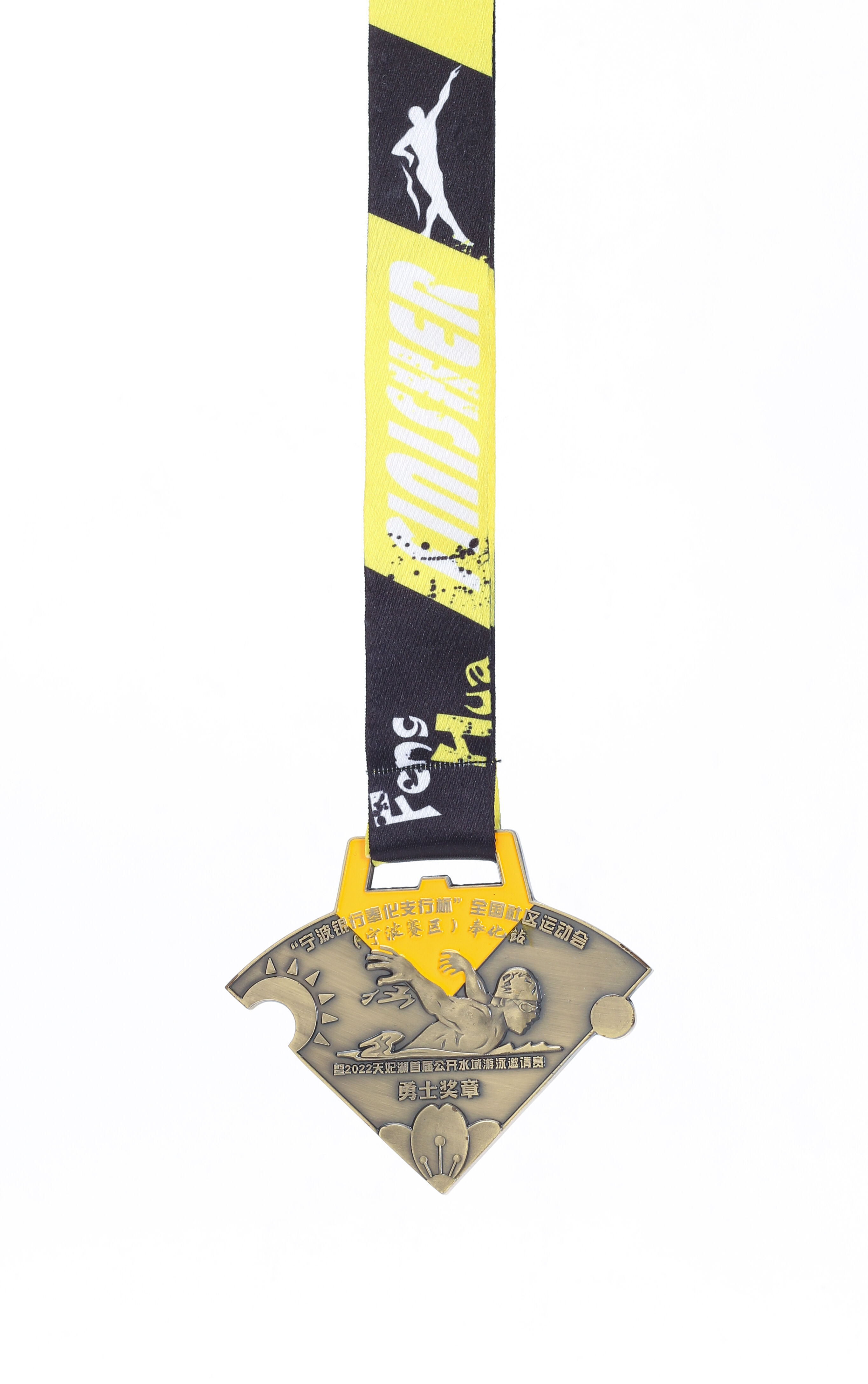
In the competitive world of sports recognition, organizers and event planners constantly seek award options that stand out while fostering deeper meaning among participants. Traditional medals serve their purpose, but the puzzle medal has emerged as an innovative solution that transforms individual achievement into a symbol of collective effort and team unity. This distinctive award format offers functional versatility combined with symbolic depth, making it an increasingly popular choice for tournaments, relay races, team championships, and multi-stage competitions where collaboration matters as much as individual performance.
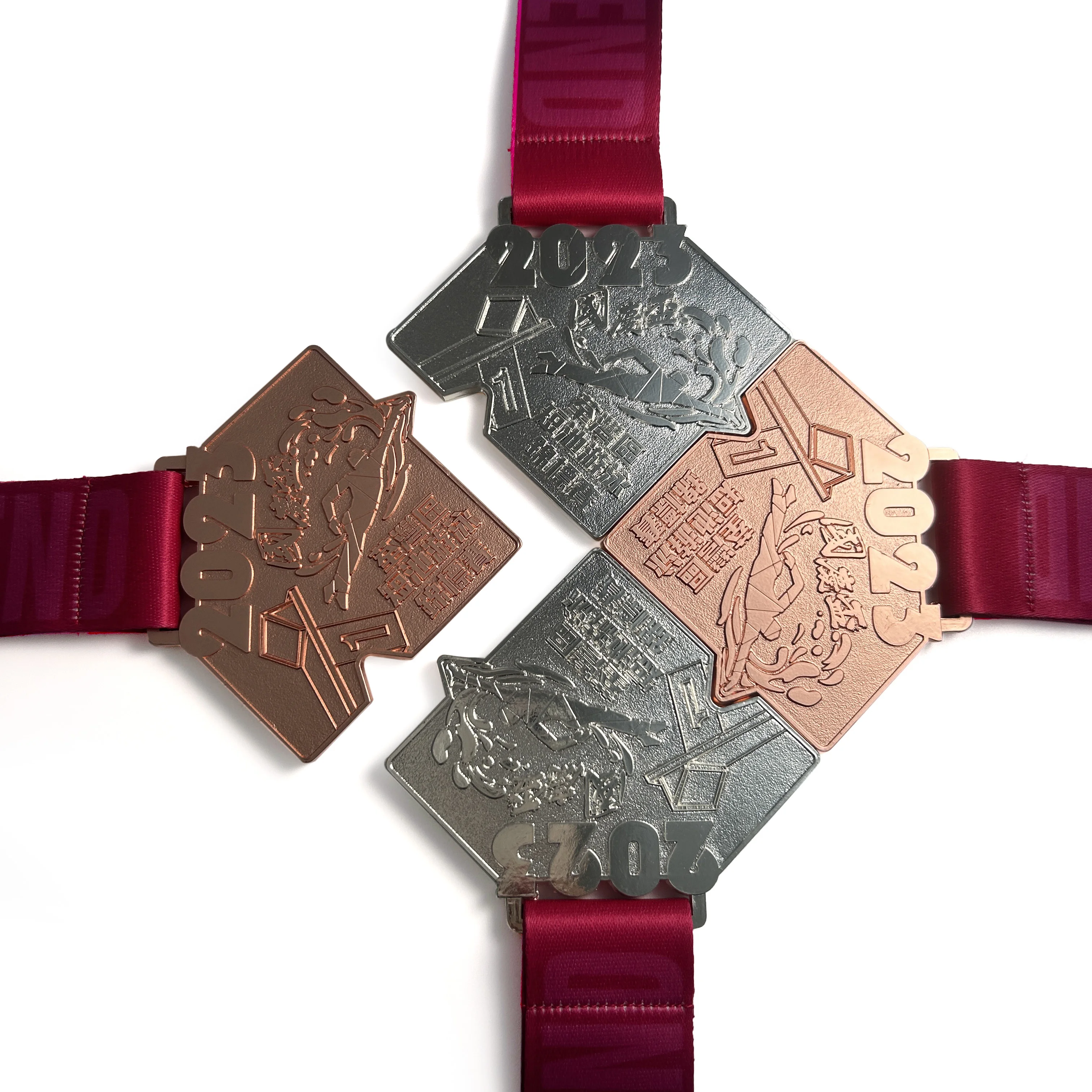
What distinguishes the puzzle medal from conventional awards is its fundamental design philosophy: each piece represents an individual contribution that only gains full meaning when connected with others. This structural characteristic addresses a growing demand in sports culture to balance personal excellence with team dynamics, providing tangible representation of how individual efforts combine to create something greater. Whether used in swimming relays, team marathons, corporate sports events, or multi-division tournaments, puzzle medals create memorable experiences that extend beyond the podium moment, encouraging participants to view their achievements within a broader collaborative context.
The Symbolic Architecture Behind Puzzle Medal Design
Representation of Team Unity and Individual Contribution
The core appeal of any puzzle medal lies in its dual representation capability. Each interlocking piece functions as a complete award honoring an individual athlete's performance, yet visually communicates incompleteness that invites connection. When team members bring their pieces together, the complete image emerges, transforming separate achievements into a unified whole. This design philosophy resonates particularly well in relay events, where sequential performance determines overall success, and in team sports where different positions contribute specialized skills toward common victory.
From a psychological perspective, this tangible representation of interdependence reinforces positive team dynamics. Athletes receive personal recognition through their individual piece while simultaneously being reminded of their role within the larger structure. The puzzle medal format naturally discourages isolated celebration and encourages athletes to seek out teammates to complete the design, fostering post-event interaction and strengthening social bonds within teams. This symbolic architecture proves especially valuable in youth sports programs where teaching collaboration alongside competition forms part of developmental objectives.
Customization Potential for Event-Specific Messaging
The segmented structure of puzzle medals opens extensive customization possibilities that standard medals cannot match. Event organizers can design each piece to represent specific race segments, competition stages, or team roles, with the complete assembled image revealing event branding, sponsor logos, or motivational imagery. For example, a triathlon might feature three interlocking pieces representing swimming, cycling, and running segments, with each piece incorporating discipline-specific design elements that contribute to a cohesive overall composition when combined.
This customization extends to material selection, finish options, and dimensional variations. High-quality puzzle medals can incorporate different metal finishes for each piece to distinguish team member roles or achievement levels, use colored enamel to enhance visual appeal, or include ribbon attachments that coordinate with event themes. The puzzle medal concept accommodates both minimalist designs emphasizing clean geometric interlocking and elaborate compositions featuring detailed artwork across the complete assembly. This flexibility allows event planners to align awards precisely with brand identity and event character while maintaining functional integrity.
Durability and Functional Design Considerations
Effective puzzle medal design balances symbolic meaning with practical durability. The interlocking mechanism must be engineered for secure connection without excessive force while remaining resistant to accidental separation during handling and display. Quality manufacturers employ precision die-casting techniques to ensure consistent piece dimensions and smooth interlocking edges that prevent scratching or finish damage during assembly. The connection points require particular attention to stress distribution, as these areas experience concentrated force and must withstand repeated assembly and disassembly without deformation or wear.
Material selection directly impacts both longevity and perceived value. Zinc alloy remains the most common base material for sports puzzle medals due to its favorable strength-to-weight ratio, detailed casting capability, and corrosion resistance when properly finished. Premium versions may incorporate brass elements or genuine precious metal plating for high-stakes competitions. The finish application process, including electroplating, powder coating, or enamel work, must account for the increased edge length inherent in segmented designs, ensuring complete coverage and consistent appearance across all connection surfaces where pieces meet.
Strategic Applications Across Different Sports Contexts
Relay Races and Sequential Performance Events
Relay competitions represent the most natural application for puzzle medals, as the award structure directly mirrors the event format. Each relay leg corresponds to one puzzle piece, creating intuitive alignment between competition structure and recognition system. Swimming relay teams particularly benefit from this award format, as the puzzle medal acknowledges both individual split times and collective team result. The physical act of team members connecting their pieces after the race provides a ceremonial conclusion that reinforces the relay's fundamental principle: victory through coordinated sequential effort.
Track and field relay events similarly gain enhanced meaning through puzzle medal implementation. The 4x100 meter and 4x400 meter relays involve precise baton exchanges where individual speed must coordinate with seamless transitions, a dynamic the puzzle medal captures symbolically. Event organizers can extend this concept to mixed-gender relays or age-group relay competitions, using piece design variations to indicate different categories while maintaining overall design cohesion. The puzzle medal format also works effectively for non-traditional relay formats like obstacle course relays or adventure racing stages where teams navigate different challenge types sequentially.
Team Championship Recognition Systems
Beyond sequential events, puzzle medals serve team championship recognition where multiple athletes contribute across various events or positions. Basketball, volleyball, and soccer tournaments can award puzzle pieces to starting lineup members or all roster participants, with the complete puzzle medal representing the championship squad. This application addresses a common challenge in team sports recognition: balancing acknowledgment of star performers with recognition of supporting players whose contributions prove essential to team success.
The puzzle medal concept extends naturally to league-wide recognition programs where divisional winners receive interlocking pieces that combine into a grand championship symbol. Regional sports organizations sometimes implement puzzle medal systems across multiple qualifying events throughout a season, with athletes collecting pieces from different competitions that ultimately assemble into a season-ending achievement award. This progressive collection approach increases engagement across the competitive calendar and provides tangible representation of sustained performance rather than single-event success.
Corporate and Community Sports Initiatives
Corporate team-building sports events increasingly adopt puzzle medals to reinforce organizational values around collaboration and collective achievement. Company sports days, charity runs, and corporate challenge events use the puzzle medal format to symbolize departmental cooperation or cross-functional teamwork. The assembled puzzle medal can be displayed in common areas as a permanent reminder of successful collaboration, extending the award's impact beyond the immediate recognition moment into ongoing organizational culture reinforcement.
Community wellness programs and charity fundraising sports events find particular value in puzzle medals due to their inclusive nature. Participants at various skill levels receive equal recognition through identical piece design, while the assembly requirement encourages social interaction among participants who might not otherwise connect. School sports programs use puzzle medals to teach younger athletes about teamwork fundamentals, making the abstract concept of collective effort concrete through physical puzzle assembly. The puzzle medal thus transcends pure performance recognition to become an educational tool supporting broader program objectives.
Manufacturing and Quality Factors That Differentiate Premium Puzzle Medals
Precision Engineering in Die Casting and Finishing
The production quality of a puzzle medal depends fundamentally on die-casting precision. Unlike solid medals where minor dimensional variations remain invisible, puzzle medals require exact tolerances across interlocking surfaces to ensure consistent fit across production runs. High-quality manufacturers employ CNC-machined dies that maintain micron-level accuracy, preventing the fit variations that would result in some pieces connecting too loosely while others require excessive force. This precision extends to edge finishing, where burrs or inconsistent curves can create connection difficulties or compromise safety.
Surface finishing processes must account for the increased complexity of segmented designs. Electroplating baths must achieve uniform coverage across connection edges where pieces meet, requiring careful rack positioning and extended processing times compared to solid medals. Multiple finish layers including base plating, color plating, and protective clear coats must be applied with consistent thickness across all surfaces to prevent finish failure at stress points. Quality control protocols for puzzle medals necessarily include fit testing across sample pieces from different production batches to verify consistent interlocking performance throughout the order.
Material Selection and Structural Integrity
The material composition selected for puzzle medal production directly affects both immediate functionality and long-term durability. Zinc alloy formulations with higher zinc content provide superior casting detail and strength but require more sophisticated temperature control during production. Lower-quality zinc alloys may cast successfully but develop brittleness over time, particularly at the connection points that experience repeated stress. Premium puzzle medals often specify zinc alloy compositions meeting international standards such as ASTM B86 or equivalent specifications that ensure consistent material performance.
The thickness profile across the puzzle medal design requires careful engineering to balance structural strength with weight considerations. Connection points need reinforcement to handle assembly stress without making pieces uncomfortably heavy or visually disproportionate. Advanced manufacturers employ finite element analysis during design development to identify stress concentration areas and optimize material distribution accordingly. This engineering investment proves particularly important for larger puzzle medals or designs featuring intricate internal cutouts that create structural weak points requiring compensation through strategic thickness variation.
Connection Mechanism Innovation and Patent Considerations
The specific interlocking mechanism employed in a puzzle medal significantly impacts user experience and durability. Basic designs use simple jigsaw-style connections with protruding tabs fitting into corresponding recesses, while advanced systems incorporate rotational locking, magnetic assistance, or snap-fit mechanisms that provide audible and tactile connection confirmation. Some premium puzzle medal designs feature patented connection systems that prevent accidental separation while remaining easy to assemble, addressing the fundamental challenge of balancing security with accessibility.
Innovation in connection design continues to evolve as manufacturers seek competitive differentiation. Recent developments include dual-axis interlocking that allows pieces to connect from multiple angles, graduated connection depth that provides progressive resistance feedback during assembly, and reversible designs where pieces can connect in multiple orientations to create different display configurations. These advanced features add manufacturing complexity and cost but provide enhanced user experience that justifies premium pricing for high-profile events where award quality directly reflects on event prestige and organizational reputation.
Procurement Strategies and Budget Considerations for Event Organizers
Volume Pricing Structures and Minimum Order Implications
Event organizers evaluating puzzle medals must understand the pricing dynamics that differ from standard medal procurement. The increased manufacturing complexity of multi-piece designs affects per-unit costs, particularly at lower order volumes where die tooling expenses constitute a larger percentage of total cost. Most manufacturers establish minimum order quantities of 50 to 100 complete sets for custom puzzle medal designs due to the upfront tooling investment required for precision interlocking components. Standard catalog designs with existing tooling may accommodate smaller quantities but limit customization options.
Volume pricing tiers for puzzle medals typically show steeper discount curves than solid medals because per-unit manufacturing costs decrease more dramatically with production scale. The transition from 100 sets to 500 sets might yield 30-40 percent unit cost reduction as fixed tooling costs amortize across larger volumes and production setup efficiencies improve. Event organizers planning multi-year programs should consider consolidated ordering across multiple events to access volume pricing tiers, provided storage capacity exists for inventory management between events and design consistency across years aligns with program branding strategy.
Lead Time Planning and Production Scheduling
Production timelines for custom puzzle medals extend beyond standard medal schedules due to additional manufacturing steps and more demanding quality control requirements. From final design approval to delivery, organizers should allocate 4-6 weeks for standard puzzle medal orders and 6-8 weeks for complex designs involving multiple finishes, enamel work, or innovative connection mechanisms. Rush production remains possible but typically incurs premium charges of 20-30 percent and may require design compromises to accelerate manufacturing processes.
The production schedule for puzzle medals involves multiple critical path stages where delays compound across subsequent steps. Die production and approval consume 7-10 days, sample production and revision require another 5-7 days, and bulk production with finishing occupies 15-20 days depending on order size and finish complexity. Quality inspection and packaging add several days before shipping logistics commence. Event organizers should build buffer time into their procurement timeline to accommodate potential revision cycles and avoid compressed schedules that force quality compromises or incur expensive expedited shipping costs to meet event dates.
Supplier Evaluation and Quality Assurance Protocols
Selecting a reliable puzzle medal supplier requires evaluation beyond price comparison to assess manufacturing capabilities specific to interlocking designs. Relevant qualification criteria include die-making precision equipment, experience with multi-piece award products, quality control protocols for fit testing, and willingness to provide pre-production samples demonstrating actual interlocking function rather than just visual appearance. Suppliers should demonstrate understanding of tolerance accumulation issues where minor variations in each piece compound into significant fit problems in the assembled configuration.
Quality assurance for puzzle medal orders should include contractual specifications for interlocking performance, such as connection force requirements, separation resistance thresholds, and durability through multiple assembly cycles. Responsible suppliers provide sample sets from actual production runs rather than hand-finished prototypes that may not represent bulk production quality. Event organizers should request detailed photography showing connection points from multiple angles and, when feasible, physical samples for hands-on evaluation before approving bulk production. Documentation of material certifications, finish specifications, and compliance with safety standards for sports equipment provides additional assurance for high-visibility events where award quality reflects on organizational credibility.
Implementation Best Practices for Maximum Impact and Participant Satisfaction
Presentation Ceremony Integration and Assembly Choreography
The unique nature of puzzle medals enables presentation ceremonies that extend beyond traditional award distribution into interactive team moments. Effective ceremonies distribute individual pieces to team members first, allowing each athlete to examine their personal award before bringing the team together for collaborative assembly. This staged approach creates natural ceremony pacing with multiple photo opportunities: individual piece presentation, progressive assembly process, and final completed puzzle medal display. The assembly moment itself generates emotional impact as the complete image emerges, providing visceral representation of team achievement that static awards cannot match.
Ceremony planners should prepare assembly staging that accommodates the physical logistics of piece connection. For larger teams with 6-8 pieces or more, providing a stable assembly surface prevents awkward mid-air connection attempts that can appear disorganized or result in dropped pieces. Some events incorporate the puzzle medal assembly into team celebration traditions, such as connecting pieces while chanting team slogans or performing synchronized assembly movements. These choreographed elements transform the puzzle medal from passive award into active ceremony component that enhances overall event experience and creates distinctive content for event photography and video documentation.
Storage, Display, and Long-Term Preservation Guidance
Post-event guidance helps athletes maximize the lasting value of their puzzle medals through proper care and display. Individual pieces can be stored in protective pouches or small display cases when not assembled, preventing scratches or finish wear during storage. For permanent assembled display, organizers should recommend mounting solutions that support the puzzle medal structure without placing stress on connection points, such as shadow boxes with backing support or display stands with distributed weight bearing across all pieces rather than hanging from a single connection point.
Athletes frequently inquire about assembly permanence versus maintaining separation flexibility. While puzzle medals are designed for repeated assembly and disassembly, permanent bonding using appropriate adhesives transforms the award into a unified display piece that eliminates accidental separation risk. This approach suits situations where the complete puzzle medal will be permanently displayed in a team facility or individual trophy collection. Conversely, maintaining piece separation allows athletes to display their individual contribution independently while retaining the option for periodic team reunions where members bring pieces together for commemorative photos or anniversary celebrations, extending the award's social connectivity function across years.
Communication Strategies and Participant Education
Maximizing puzzle medal impact requires clear communication explaining the award concept and its symbolic meaning to participants. Pre-event communications should describe the puzzle medal format, explain how pieces will be distributed, and emphasize the collaborative assembly aspect to build anticipation. This preparation ensures athletes understand the award's dual nature as both personal achievement recognition and team unity symbol, preventing confusion during presentation ceremonies and encouraging appropriate appreciation for the design concept.
Post-event follow-up communications can extend puzzle medal engagement by sharing photos of completed assemblies, highlighting stories of team members connecting across distances to photograph their assembled pieces together, or creating social media campaigns encouraging teams to share creative assembly displays. Some organizations develop hashtag campaigns around their puzzle medal events, aggregating participant posts showing different assembly configurations or creative display approaches. These communication strategies transform the puzzle medal from a one-time award into an ongoing engagement tool that reinforces event memories and strengthens community bonds among participants long after competition concludes.
FAQ
How many pieces typically comprise a puzzle medal design?
Most puzzle medal designs consist of 2-8 interlocking pieces, with 3-5 pieces representing the most common configuration. The optimal piece count depends on team size and event structure. Relay events typically use one piece per leg, so a 4x100 relay would naturally use a four-piece puzzle medal design. Larger teams might receive identical duplicate pieces in different finish colors to accommodate all members while maintaining the core puzzle structure. Very large teams sometimes use nested puzzle medal systems where smaller puzzles combine into progressively larger assemblies, though this significantly increases complexity and cost.
Can puzzle medals be designed with different achievement levels indicated through the pieces?
Yes, puzzle medal designs can incorporate achievement differentiation through varied finishes applied to individual pieces while maintaining the unified complete image. Common approaches include using gold, silver, and bronze plating on different pieces corresponding to team member performance rankings, or applying gradient finishes that progress across pieces representing increasing achievement levels. However, event organizers should carefully consider whether visible piece differentiation aligns with team unity objectives, as overtly ranking contributions within the assembled puzzle medal may undermine the collaborative symbolism that makes the format appealing.
What happens if a team member loses their puzzle medal piece?
Piece loss represents a practical concern that event organizers should address through clear replacement policies established during procurement. Responsible manufacturers typically produce 5-10 percent overruns during production runs, allowing organizers to maintain small replacement inventory for lost pieces. The per-piece replacement cost generally runs 50-75 percent of the per-unit set cost when ordered during initial production but increases substantially if die tooling must be retrieved and production restarted for a small replacement order after the original run concludes. Some organizations photograph all complete assembled puzzle medals during award ceremonies to provide proof of complete set receipt should replacement needs arise later.
Are puzzle medals suitable for individual sports or only team events?
While puzzle medals are most naturally applied to team contexts, creative implementations work for individual sports through alternative symbolic frameworks. Multi-stage individual competitions can award pieces representing different race segments, skill components, or achievement milestones that combine into a complete season or career achievement symbol. Participant groups in individual sports sometimes receive puzzle pieces as part of event entry packages, with the complete assembly representing the entire competitive field rather than a specific team, emphasizing community participation alongside individual performance. The versatility of the puzzle medal concept allows adaptation to various competitive structures beyond strictly defined team formats.
Table of Contents
- The Symbolic Architecture Behind Puzzle Medal Design
- Strategic Applications Across Different Sports Contexts
- Manufacturing and Quality Factors That Differentiate Premium Puzzle Medals
- Procurement Strategies and Budget Considerations for Event Organizers
- Implementation Best Practices for Maximum Impact and Participant Satisfaction
- FAQ